Table of Contents
Best SEO in Digital Marketing: A Complete Guide to Ranking Higher and Growing Faster
Understanding the best SEO in digital marketing is one of the most valuable things a business owner or marketer can invest time in today. Search engines remain the starting point for most buying decisions, and businesses that master search visibility consistently outperform competitors who rely purely on paid ads or social media alone.
This guide breaks down what makes SEO the backbone of a strong digital marketing strategy, the practices that define genuinely effective SEO, and how to apply them to see real, measurable growth.
Why SEO Remains the Foundation of Digital Marketing
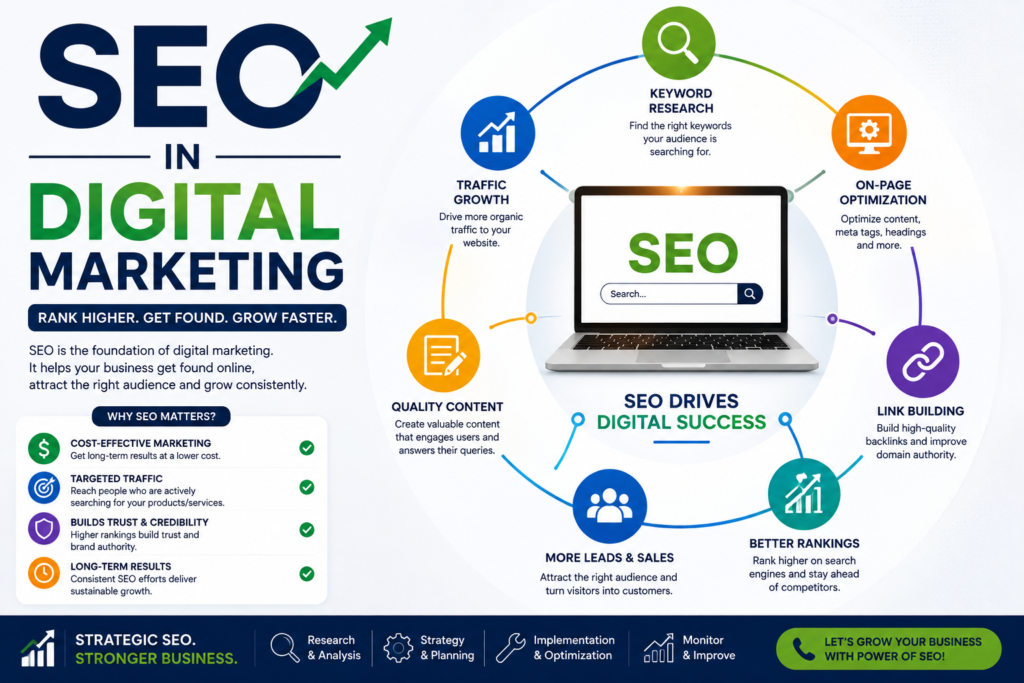
Every digital channel — social media, email, paid ads — sends people somewhere, and that destination is almost always a website. Without strong SEO, even the most creative marketing campaign eventually loses momentum once the ad budget runs out.
The Long-Term Value of Organic Search
Unlike paid advertising, which stops generating traffic the moment you stop paying, SEO builds compounding value. A well-optimised page can continue attracting visitors for years, making it one of the most cost-effective long-term investments in any marketing plan.
How Search Behaviour Has Changed
Customers today research extensively before buying — comparing options, reading reviews, and asking detailed questions through search engines. This shift is exactly why identifying and applying the best SEO in digital marketing practices has become a competitive necessity rather than a nice-to-have.
Core Elements That Define the Best SEO in Digital Marketing
Not all SEO work delivers the same results. The strategies that actually move the needle share a few common characteristics.
Keyword Research Built Around Real Intent
Effective SEO starts with understanding what your audience is actually typing into search engines, and more importantly, why they’re searching for it — whether to learn, compare, or buy.
Short-Tail vs Long-Tail Keywords
Short-tail keywords bring broad visibility but heavy competition, while long-tail phrases attract smaller, highly targeted audiences that are often much closer to making a purchase decision.
High-Quality, Relevant Content
Search engines increasingly reward content that thoroughly answers a searcher’s question, rather than thin pages stuffed with keywords. Depth, clarity, and usefulness now matter more than keyword density ever did.
Technical SEO Fundamentals
A technically sound website — fast loading speed, mobile responsiveness, and clean code — gives search engines every reason to trust and rank your pages higher.
Site Speed and Core Web Vitals
Pages that load quickly and respond smoothly to user interaction are directly rewarded by Google’s ranking algorithms, making performance optimisation a non-negotiable part of modern SEO.
Mobile-First Optimisation
With most searches now happening on mobile devices, a site that isn’t fully optimised for smaller screens risks losing both rankings and visitors.
Backlinks and Authority Building
Earning links from reputable, relevant websites signals to search engines that your content is trustworthy — one of the strongest ranking factors that separates average pages from top-performing ones.
Guest Posting and Digital PR
Contributing valuable content to respected industry websites remains one of the most sustainable ways to build authoritative backlinks over time.
How the Best SEO in Digital Marketing Integrates with Other Channels
SEO rarely works in isolation. The strongest digital marketing strategies treat it as one part of a larger, connected system.
SEO and Content Marketing Working Together
Blog posts, guides, and videos created for content marketing also serve as SEO assets, giving search engines fresh, relevant material to index while building topical authority for your website.
SEO and Paid Advertising as Complementary Channels
While SEO builds long-term organic traffic, PPC campaigns can generate immediate leads, making the two channels highly complementary rather than competing strategies.
SEO and Social Media Signals
Although social shares aren’t a direct ranking factor, increased visibility and traffic from social platforms often indirectly support SEO by driving engagement and brand searches.
Common Mistakes That Undermine SEO Efforts
Even well-intentioned SEO campaigns can fail when a few key principles are ignored.
Keyword Stuffing
Overusing a target keyword unnaturally throughout content no longer improves rankings and can actively hurt readability and trust with both users and search engines.
Ignoring User Experience
A page that ranks well but frustrates visitors with slow load times, intrusive pop-ups, or confusing navigation will eventually lose both rankings and conversions.
Chasing Quick Fixes
Shortcuts like buying low-quality backlinks or duplicating content from other sites may offer short-term gains but almost always lead to penalties and long-term damage.
How to Apply the Best SEO in Digital Marketing to Your Own Strategy
Turning SEO knowledge into results requires a structured, consistent approach rather than one-off efforts.
Start With an SEO Audit
Understanding your website’s current strengths and weaknesses — technical issues, content gaps, and existing rankings — gives you a clear starting point before making any changes.
Build a Content Calendar Around Target Keywords
Planning content in advance around researched keywords ensures consistent publishing and steady progress, rather than sporadic, disconnected efforts.
Track Performance and Adjust Continuously
SEO isn’t a one-time task. Monitoring rankings, traffic, and conversions regularly allows you to refine your approach based on what’s actually working.
Final Thoughts
Mastering the best SEO in digital marketing isn’t about chasing every new trend or algorithm update — it’s about consistently applying proven fundamentals: quality content, technical soundness, genuine authority building, and a clear understanding of what your audience is searching for. Businesses that commit to this approach see steady, compounding growth that paid channels alone simply can’t match.
Frequently Asked Questions
What is considered the best SEO in digital marketing today? The most effective approach combines thorough keyword research, high-quality content, strong technical foundations, and genuine backlink authority — rather than relying on any single shortcut or tactic.
How long does it take to see SEO results? Most websites begin seeing meaningful improvements in rankings and traffic within three to six months, depending on competition and the site’s starting condition.
Can SEO work without paid advertising? Yes — SEO can independently drive consistent, long-term traffic, though pairing it with paid campaigns often accelerates results, especially for newer websites still building authority.